Beyond the Drive-Thru Window: Why Your App and Kiosk Receipts Are the Surveys McDonald's Actually Reads
Photo: Mr.ちゅらさん, CC BY-SA 4.0, via Wikimedia Commons
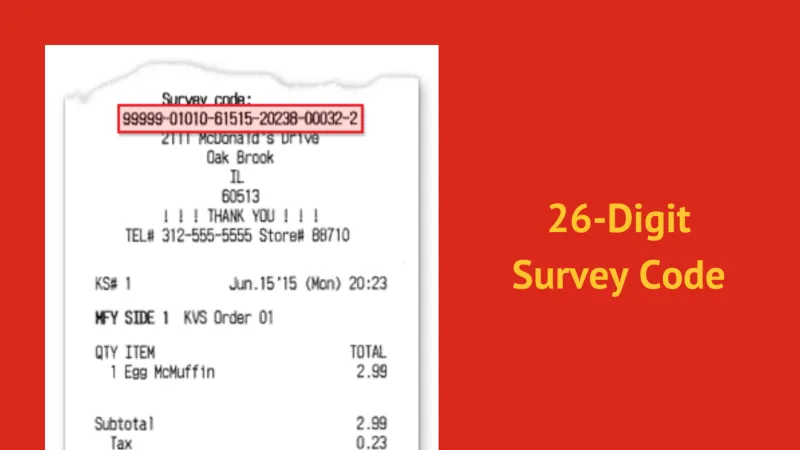
The receipt used to be a drive-thru artifact. You'd pay, get a slip with a survey code, and maybe fill it out later. In 2026, that slip has cousins: an app order confirmation, a kiosk printout, a delivery bag tag. Each one can carry a survey invitation, and each one tells McDonald's a different story.
The receipt moved, but the stakes didn't
Digital orders aren't just convenient. They're logged. An app order knows exactly what you bought, when you bought it, and which location fulfilled it. A kiosk order knows how long you stood there and whether you customized your burger. A delivery order knows the handoff time and the courier. That level of detail changes what your survey feedback can prove.
When you fill out a McDVoice survey from a digital receipt, you're not just saying 'service was slow.' You're attaching that complaint to a specific transaction. Corporate can pull the order, check the timestamp, and see whether the fries were supposed to be hot. That's a lot more actionable than a vague memory of a drive-thru visit.
Curbside pickup has a paper trail (and a paper trail has opinions)
Curbside orders are a special kind of feedback gold. The customer parks, waits, and expects a handoff. If the wait stretches, the survey captures it. If the order is missing a burger, the survey captures that too. But curbside also exposes things drive-thru complaints miss: parking lot layout, signage, whether anyone actually came out, and whether the food was still warm when it reached the car.
For McDonald's, curbside feedback is operational precision. A cluster of complaints about long waits at a specific store might trigger a staffing review. Complaints about missing items might trigger a packaging check. And complaints about cold food might trigger a holding-time review. The survey doesn't fix the problem, but it points a flashlight at it.
Kiosks don't blink, but they do log everything
Kiosk orders are self-service, but they're not anonymous. The machine records every tap. If you order a Quarter Pounder with no onions and extra pickles, the kiosk knows. If the kitchen misses the customization, your survey complaint can be matched to the exact order. That's powerful.
Kiosk feedback also tends to be more specific. People who use kiosks are often already engaged with the ordering process. They notice details. They might complain that the kiosk didn't offer a sauce option or that the screen was smudged. Those small gripes can lead to software updates or cleaning schedules. Corporate reads them because they're easy to quantify.
Delivery feedback is a different animal
Delivery orders add a third party. McDonald's makes the food, but someone else drives it. That creates a gray zone. If your fries arrive cold, was it the store's fault or the courier's? The survey can't always tell. But it can capture packaging issues: a spilled drink, a crushed box, a missing sauce packet.
Delivery feedback has pushed McDonald's to rethink packaging and handoff procedures. If enough customers complain that their fries are soggy by the time they arrive, the company may test new vents or different bag materials. Those changes start as survey comments. So even though delivery is a partnership, your feedback still lands on McDonald's desk.
Why digital surveys may carry outsized weight
Digital receipts are identifiable. They're timestamped. They're itemized. That makes them easier to verify and act on. A store manager can look up the order and check the camera footage. A corporate analyst can compare complaint rates across locations. The data is cleaner than a handwritten comment about 'bad service.'
There's also a volume effect. Digital orders are growing, especially among younger customers. As more people order through apps and kiosks, digital survey responses become a larger share of the feedback pool. That means the opinions of app users may shape decisions more than they realize.
A caution for app users: what you type travels
Here's the uncomfortable part. When you fill out a survey from an app order, your feedback is tied to your account. It's not anonymous in the way a paper receipt might feel. That doesn't mean corporate is reading your name and judging you, but it does mean your comments can be traced back to a specific visit.
So be careful what you type. Be specific, but be fair. Don't write a novel about your bad day. Don't use the open-ended box to make jokes. And don't include personal information you wouldn't want stored. The best feedback is factual: what you ordered, what went wrong, and what would have made it right.
The new feedback etiquette
If you want your digital survey to matter, treat it like a report. Mention the order number if you have it. Name the item that was wrong. Say whether the problem was speed, accuracy, temperature, or cleanliness. And if something went right, say that too. Balanced feedback is more credible than a rant.
The receipt may have moved from the drive-thru window to your phone, but the purpose is the same. Your words are a signal. The clearer the signal, the more likely someone acts on it.