Not All Feedback Is Created Equal: The Hidden Scoring System Behind McDonald's Survey Decisions
Photo: GeneralAB13, CC BY-SA 4.0, via Wikimedia Commons
You took five minutes out of your day. You filled out the McDVoice survey honestly, rated your experience, typed out a thoughtful comment about the soggy bun or the drive-thru line that stretched onto the service road. Then... nothing. No change. Same bun. Same line. Same Tuesday.
Meanwhile, someone across town submits two sentences and suddenly their location gets a new shift manager.
It feels random. It isn't.
McDonald's — like most large QSR (quick-service restaurant) chains — doesn't have a team of humans reading every single survey response and deciding what to act on. What they have is something far more mechanical, and honestly, far more interesting: a layered data system that scores, clusters, routes, and prioritizes feedback before any decision-maker ever lays eyes on it.
Understanding how that system works is the difference between feedback that collects digital dust and feedback that actually moves the needle.
Volume Isn't the Whole Story — But It's the Starting Point
The most intuitive part of the triage system is also the most misunderstood. Yes, volume matters. When a specific complaint — say, consistently incorrect orders at a particular location — gets flagged repeatedly over a short time window, that pattern gets elevated. Corporate analytics platforms are designed to detect complaint clustering, meaning a spike in similar responses at the same store location within the same week carries significantly more weight than a single five-star review or a one-off grievance.
But here's where people get tripped up: volume alone doesn't guarantee action. A hundred people all vaguely saying "the service was slow" generates a lot of noise but very little actionable signal. The system is designed to reward specificity, not just frequency.
The Keyword Layer: What the Algorithm Is Actually Listening For
This is where things get genuinely surprising. McDonald's feedback processing — like most enterprise-level customer satisfaction platforms — relies on natural language processing (NLP) tools that scan open-text responses for specific keyword categories. These aren't just obvious red flags like "rude" or "wrong order." The system is trained to detect sentiment patterns, urgency language, and what industry analysts call operational failure indicators.
Certain phrases tend to trigger faster routing. Language that implies a food safety concern, references to a repeat experience ("this is the third time" or "every single visit"), or comments that mention specific staff behavior by role rather than just a vague feeling — these tend to move through the system more quickly.
On the flip side, feedback that's entirely abstract or emotional without concrete detail — "this place is terrible" or "worst McDonald's ever" — often gets categorized as low-signal sentiment data. It contributes to overall satisfaction scoring but rarely triggers a direct operational response.
Location Tier Matters More Than You'd Expect
Here's something most regular survey-takers never consider: not every McDonald's location is weighted the same in the feedback system. High-traffic flagship locations — think major urban intersections, airport restaurants, or stores near theme parks — are monitored more intensively because their performance data influences broader brand perception metrics.
A complaint submitted at a high-volume interstate highway location during peak summer travel season is going to enter a more sensitive monitoring environment than the same complaint submitted at a lower-traffic suburban location on a Tuesday afternoon in February. That's not a value judgment about which customers matter more — it's a reflection of how corporate prioritizes operational risk and brand exposure.
Rural and lower-traffic locations aren't ignored, but they often operate on longer feedback review cycles, which is why customers at those spots sometimes feel like they're shouting into the void.
The Recency Window: Timing Your Survey Submission
Most people don't think about when they submit a survey beyond the obvious code expiration deadline. But timing within a reporting cycle can subtly affect how your feedback gets processed.
McDonald's, like most large franchise operations, works on weekly and monthly performance reporting cycles. Feedback submitted early in a reporting window gets aggregated with more responses before the cycle closes, which can either amplify or dilute your specific input depending on what else comes in. Feedback submitted right before a cycle closes, on the other hand, sometimes carries outsized influence because it's one of the last data points incorporated into that period's performance snapshot.
This isn't something you can game with perfect precision — but it does suggest that submitting your survey promptly after your visit, rather than waiting until the code is about to expire, gives your response more time to be part of a meaningful data cluster.
Ratings and Comments Work Together — Not Separately
One of the biggest misconceptions about the McDVoice survey is that the numeric ratings and the open-text comments are evaluated independently. They're not. The system cross-references them, and inconsistencies actually get flagged.
If you rate your overall experience a 4 out of 5 but then write a scathing comment about a hygiene issue, that mismatch signals something worth investigating. Conversely, if you give a 1-star rating but leave no comment, the system treats it as a sentiment data point rather than an actionable complaint. The most influential survey responses are ones where the ratings and the written feedback tell a coherent, consistent story.
This is why survey guides — including the ones we've published here at McDVoice Survey Hub — consistently emphasize that skipping the comment section is one of the biggest missed opportunities a customer can make.
What "Actionable" Actually Means to a Franchise System
Here's the reality check that ties all of this together. McDonald's is a franchise system, which means the chain between your survey response and an actual operational change involves multiple layers: corporate analytics, regional operations managers, area supervisors, and individual franchise owners. The feedback algorithm doesn't just decide what's important — it decides what's actionable at which level.
Some feedback gets routed to the franchise owner directly. Some gets escalated to a regional operations team. Some informs brand-level menu or policy decisions that play out over months or years. Your single survey response almost never triggers a single discrete action — but it becomes part of a pattern that eventually does.
The customers who understand this are the ones who approach the McDVoice survey not as a complaint hotline but as a long-game contribution to a data ecosystem. Specific, consistent, well-timed, and coherently rated feedback doesn't just feel better to write — it's structurally more likely to end up in front of someone with the authority to actually do something about it.
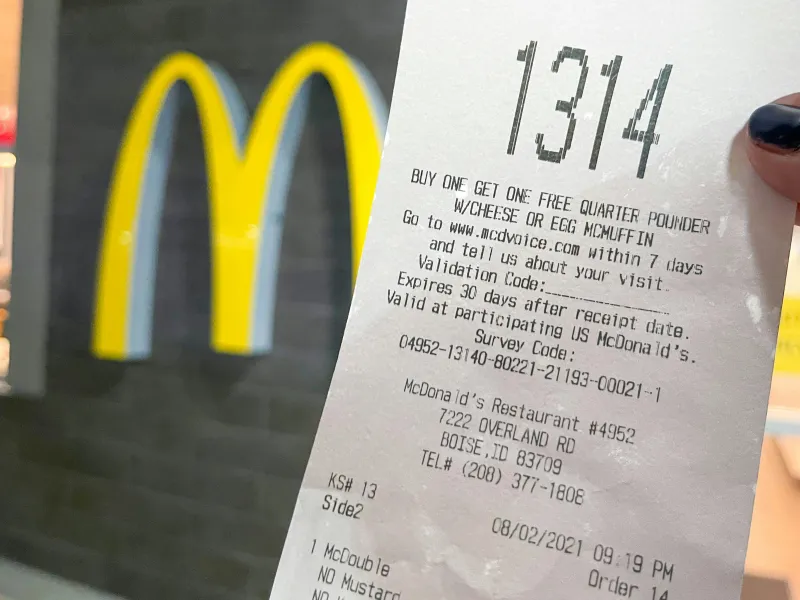
So the next time you're sitting in your car after a disappointing drive-thru run, receipt in hand, deciding whether the survey is worth your time — know that how you fill it out matters just as much as whether you fill it out at all.