Latte Loyalty: Why McCafé Drinkers Punch Above Their Weight in the McDVoice Survey
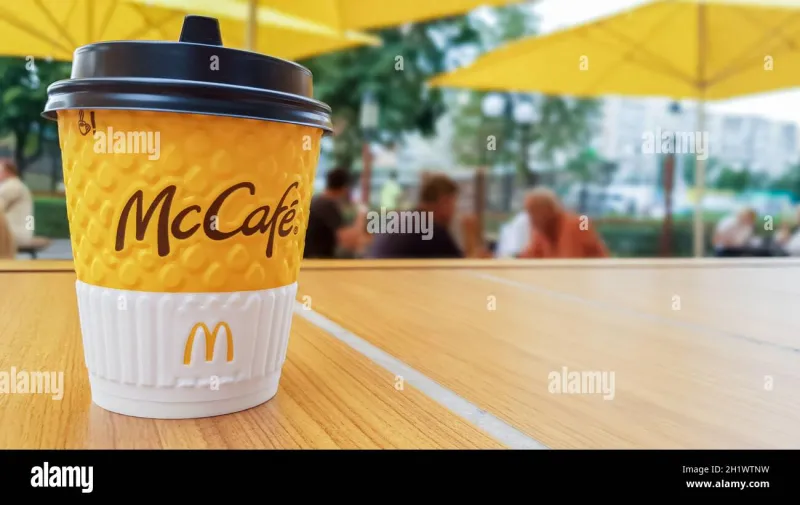
Photo: McCafe coffee cup McDonald's breakfast counter, via c8.alamy.com
There's a running joke among fast-food analysts that McDonald's doesn't really sell hamburgers anymore — it sells coffee with a burger chaser. Look at the numbers and the joke stops being funny. McCafé is a multi-billion-dollar business inside the business, and the breakfast daypart it anchors is one of the few places where the Golden Arches still reliably outmuscles the competition.
Which brings us to an underappreciated truth about the McDVoice survey: if you're filling it out about a coffee order, you're not just another customer. You're a data point in the most contested battlefield in American fast food.
The Coffee Customer Is a Different Animal
Here's what most people don't realize about survey weighting. Food complaints — cold fries, a missing patty, a sloppy burger — get logged, tallied, and routed to the store. Beverage feedback, especially McCafé-specific feedback, tends to travel further up the chain.
Why? Because a burger complaint tells McDonald's something about one store. A latte complaint tells McDonald's something about one store versus Starbucks.
When you tell the survey your caramel macchiato was lukewarm or your iced coffee tasted like last week's pot, you're feeding directly into a competitive intelligence system. McDonald's corporate doesn't measure McCafé against Burger King's coffee lineup — it measures it against the green siren on every other corner. Every survey response about drink quality, consistency, and speed gets benchmarked against what customers say about the coffeehouse down the street.
The Breakfast Daypart Lives or Dies on Beverages
The Egg McMuffin gets the glory, but the morning rush is fundamentally a beverage business. Someone who buys a $2.79 coffee every weekday is worth more annually than a once-a-month Quarter Pounder customer. Beverage buyers are habit customers, and habits are exactly what the survey system is designed to protect.
That's why drink-related survey responses feed into decisions the average customer never sees:
- Whether a location gets upgraded espresso equipment
- How barista-style training hours get allocated to crew
- Which specialty drinks make it onto the regional menu
- Whether a store keeps its lobby open early enough for the commuter crowd
A store with consistently strong McCafé survey scores becomes a candidate for premium beverage pilots. A store with weak ones? That's where you hear stories of simplified menus and reduced drink options. Your survey answer genuinely nudges those decisions.
When Your Complaint Is a Strategic Weapon
Here's the part that should make regular McCafé customers sit up: because beverage feedback is so strategically valuable, it gets noticed faster. A detailed survey comment about inconsistent espresso pulls is more likely to be flagged, aggregated, and escalated than a similarly detailed comment about napkin dispensers.
This isn't a conspiracy — it's prioritization. McDonald's spent the last decade pouring money into McCafé to stop the bleeding of breakfast customers to coffee shops. Every survey response helps them figure out whether that investment is working at the street level.
So if you're one of those people who grabs the same order every morning — large iced coffee, two sugars, splash of cream — and you've been silently tolerating a slow bar or a bitter brew: the survey is your leverage. You're not yelling into the void. You're providing exactly the kind of intel a company at war for the breakfast daypart actually wants.
How to Make Your Coffee Feedback Count
A few practical notes for the daily-drive-thru crowd:
Be specific about the drink. "Coffee was bad" is noise. "Iced coffee tasted stale and watered down at 7:15 AM on a Tuesday" is signal.
Mention the alternative. If you switched from a coffeehouse chain and got disappointed, say so. That's the comparison data McDonald's craves most.
Repeat feedback compounds. One lukewarm latte is an anecdote. Three survey responses in a month about the same issue at the same store is a pattern — and patterns get store visits.
Note the daypart. Morning-beverage complaints get treated differently than afternoon ones, because that's when the strategic stakes are highest.
The next time you're sitting with a receipt and five spare minutes, remember: the burger feedback keeps the lights on, but the coffee feedback is what keeps executives up at night. If you want your voice to actually move something at McDonald's, the McCafé line of the survey is the loudest microphone in the room.