Decoded: What Every McDVoice Survey Question Is Really Asking (And How to Answer Like a Pro)

Photo: Basile Morin, CC BY-SA 4.0, via Wikimedia Commons
There's More Going On Than You Think
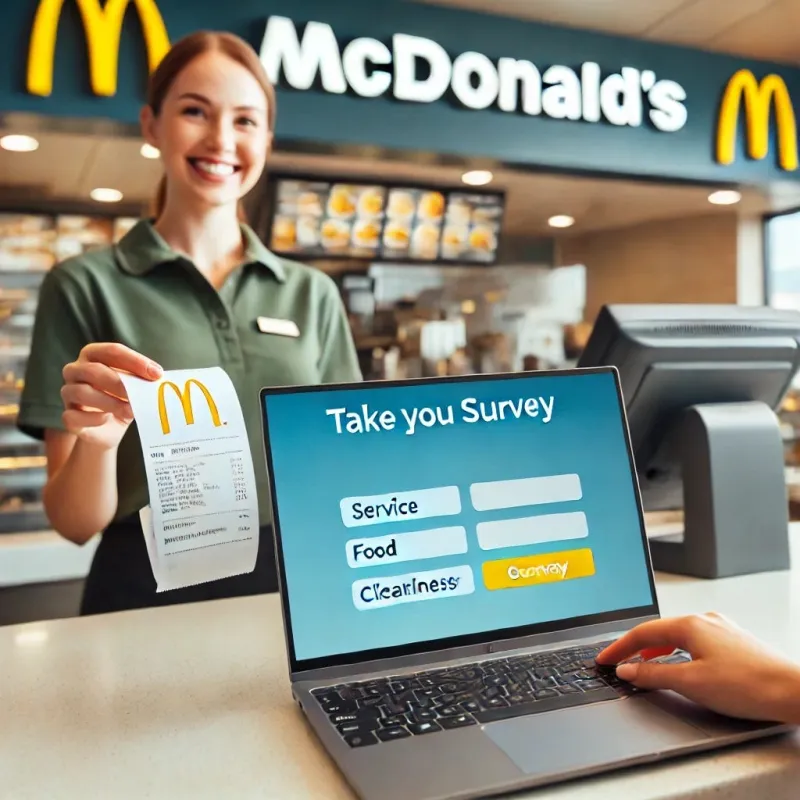
You've done it dozens of times. You finish your meal, flip over the receipt, and type that survey code into McDVoice. A few minutes later you've answered some questions, grabbed your validation code, and gone about your day. Simple enough, right?
Except the survey you just completed wasn't built casually. Every question, every rating scale, and every response option was designed with a specific data goal in mind. McDonald's — one of the most data-driven companies in the world — uses McDVoice responses to make decisions that affect everything from how long you wait in the drive-thru to what's on the menu next quarter.
So if you're going to spend two minutes filling it out anyway, you might as well understand what you're actually being asked — and how to make your answers count.
Question Type #1: The Overall Satisfaction Score
What it asks: "How satisfied were you with your overall visit?"
What it's really measuring: This is the headline metric. McDonald's calls it something close to an overall experience score, and it functions like a GPA for your visit. Franchise owners are evaluated partly on how their locations trend on this score over time, so it carries real weight.
How to use it well: Don't default to a middle score just to be polite. If your visit was genuinely great, say so — it reinforces what's working. If something went wrong, rate it honestly. A string of artificially inflated scores masks real problems and doesn't help anyone, including you as a future customer.
Question Type #2: Speed of Service Ratings
What it asks: Questions about how long you waited — at the counter, in the drive-thru, for your food after ordering.
What it's really measuring: This is one of the most operationally critical data points McDonald's collects. Wait time directly correlates with customer retention. Research across the fast food industry consistently shows that perceived wait time — even more than actual wait time — determines whether a customer comes back.
McDonald's uses speed-of-service data to benchmark individual locations against regional and national averages. A location that consistently scores low on speed during specific time windows gets flagged for staffing and operational review.
How to use it well: Be precise in your mental recall. Did you wait three minutes or eight? The difference matters to the data. If the line was long because of a rush, that's worth noting in the comment field — context helps operators distinguish between staffing issues and volume spikes.
Question Type #3: Food Quality and Accuracy
What it asks: Was your food hot? Was your order correct? Did it meet your expectations?
What it's really measuring: Two separate things that often get lumped together. Food quality scores feed into supply chain and kitchen process evaluations. Order accuracy scores feed into training and point-of-sale system assessments.
A location that scores high on quality but low on accuracy has a different problem than one that scores low on both. McDonald's analytics teams can see that distinction and route the feedback to the right department.
How to use it well: Answer these separately in your head before you rate them. Your fries might have been perfectly hot and crispy, but if you ordered no pickles and got a pickle avalanche, those are two different issues. Rate each dimension on its own merits.
Question Type #4: Staff and Service Friendliness
What it asks: How friendly, helpful, and professional was the staff during your visit?
What it's really measuring: Employee performance and customer experience culture. This is one of the most sensitive data points for franchise operators because it directly reflects the human side of their business — the part that's hardest to standardize.
Unusually high or low staff scores at a specific location trigger a closer look at management practices, training completion rates, and employee turnover patterns. McDonald's knows that high turnover often correlates with lower friendliness scores, and they use that connection to identify locations that may need management support.
How to use it well: Be fair, but be honest. If an employee went out of their way to be helpful, that's worth noting specifically in the open comment section. Names and specific behaviors are far more useful than generic praise. Same goes for negative experiences — specifics help managers address real situations rather than guessing.
Question Type #5: Cleanliness and Environment
What it asks: How clean was the dining area, restrooms, and overall restaurant?
What it's really measuring: Operational discipline and management attention to detail. Cleanliness scores are leading indicators of broader operational health — a location that can't keep its lobby clean is often struggling with other fundamentals too.
For McDonald's corporate, cleanliness data also feeds into decisions about facility renovations and remodel prioritization. Locations that consistently score low on environment get bumped up the list for upgrades.
How to use it well: Don't overlook this section just because it feels less important than food quality. If the restroom was a disaster or the tables hadn't been wiped in a while, say so. That feedback directly influences how a franchise owner allocates their cleaning staff's time and attention.
The Open Comment Field: Your Most Powerful Tool
Here's the section most people skip, and it's arguably the most valuable part of the entire survey.
Rating scales tell McDonald's that something is good or bad. Open comments tell them why — and that's the information that actually drives change. A comment that says "the drive-thru speaker was so staticky I had to repeat my order four times" gives an operator something specific to fix. A low score on its own doesn't.
You don't need to write an essay. Two or three sentences with specific details — what happened, when, and what would have made it better — is more useful than a paragraph of general impressions.
Five Tips for Feedback That Actually Gets Used
-
Fill it out soon after your visit. Memory fades fast. The more specific and accurate your recall, the more useful your feedback.
-
Don't inflate scores out of sympathy. It feels kind, but it actually hurts the restaurant long-term by hiding real issues.
-
Use the comment field every time. Even a single sentence of context transforms a number into actionable information.
-
Note the time of your visit. Many surveys ask this, but if there's a comment field, mention it. Time-of-day context is critical for staffing analysis.
-
Be consistent. Regular customers who fill out surveys repeatedly from the same location build a data profile that carries more weight than one-time responses.
Your Two Minutes, Their Next Decision
The McDVoice survey isn't a formality. It's a structured data collection system that McDonald's has invested heavily in building because they know customer insight is one of their most valuable assets. Every response you submit becomes part of a dataset that influences real decisions — about staffing, menus, training, and facility investment.
Now that you know what's behind each question, you can approach the survey less like a chore and more like a conversation. A conversation where your side of the table actually matters.