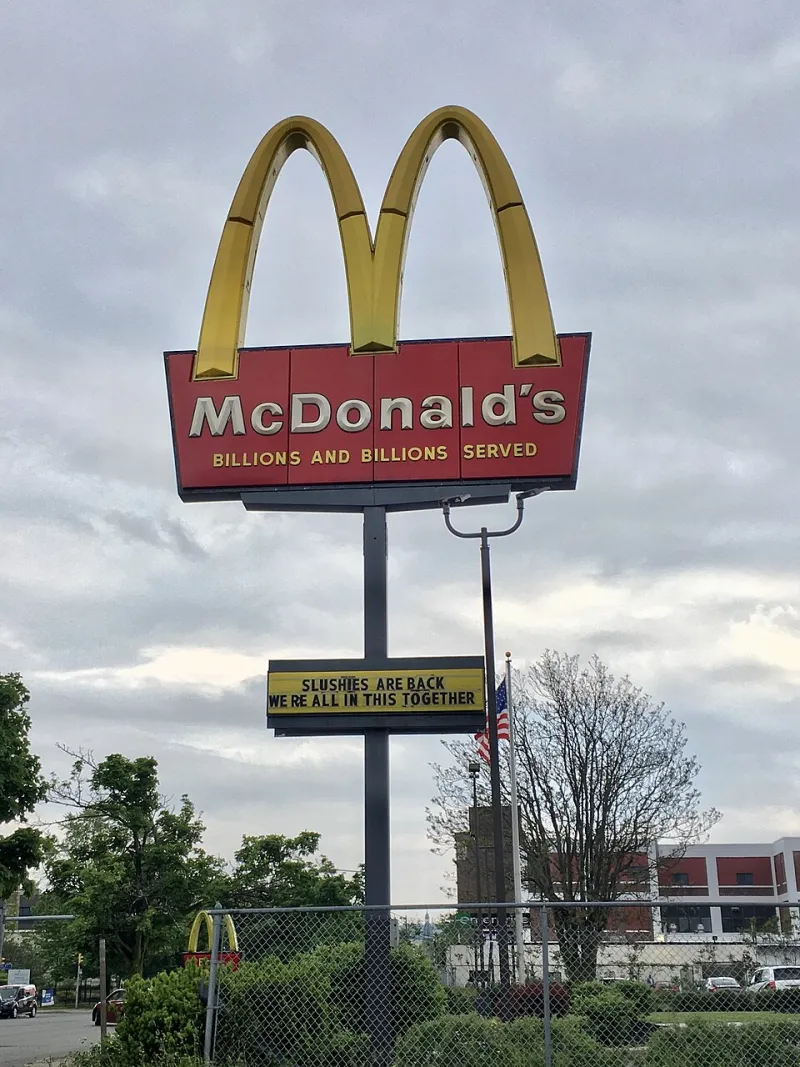
Why the Same Complaint Gets Fixed at One McDonald's but Ignored at Another
Photo: FBenjr123, CC BY-SA 4.0, via Wikimedia Commons
You've been there. You finish a McDVoice survey, pour your honest thoughts into every text box, hit submit — and then... nothing. The drive-thru still takes forever. The fries still arrive lukewarm. The same cashier who barely acknowledged you is still doing the exact same thing three visits later.
Meanwhile, a friend tells you they complained about a broken ice cream machine at their local McDonald's and within two weeks, the thing was actually fixed. Same survey platform. Same questions. Completely different outcomes.
So what gives?
The answer lives inside one of the most misunderstood parts of the McDonald's business model — and once you get it, the whole feedback puzzle starts to make a lot more sense.
McDonald's Isn't One Company — It's Thousands of Them
Here's the thing most customers don't think about when they pull into a McDonald's parking lot: that restaurant might not actually be owned by McDonald's. In fact, roughly 95% of McDonald's locations in the United States are independently operated franchises. That means a local business owner — not corporate headquarters in Chicago — is calling the shots on staffing, training, and yes, how they respond to customer feedback.
The remaining handful are corporate-owned locations, sometimes called "company-operated" restaurants. These report directly up the chain to McDonald's corporate structure.
From the outside, both types look identical. Same logo, same menu, same app. But on the inside, they operate under very different management layers — and that gap is exactly where your McDVoice feedback can either land with impact or quietly disappear.
Where Your Survey Actually Goes After You Submit It
When you complete a McDVoice survey, your responses don't just float off into a single centralized inbox somewhere. The routing depends heavily on what kind of location you visited.
At a corporate-owned restaurant, your feedback feeds into McDonald's internal reporting systems. Regional managers and corporate operations teams have visibility into that data. There are established protocols for following up on patterns — enough complaints about slow service at a particular location, and someone with real authority to make changes will eventually notice.
At a franchise location, the path looks different. Your survey data typically gets routed to the franchisee or their designated management team first. The franchisee — who might own anywhere from one location to dozens across a metro area — decides what to do with it. Some franchise operators are incredibly dialed into their feedback dashboards. Others treat it as background noise.
Corporate does maintain some oversight of franchise performance through its own metrics and field consultants, but the day-to-day response to individual survey submissions? That sits squarely in the franchisee's lap.
The Franchisee Factor: A Wild Card in Every Survey You Submit
This is where things get genuinely interesting — and a little frustrating, depending on your experience.
A franchise owner who's deeply invested in their community, who built their business from the ground up and knows their regulars by name, might check feedback reports every single week. They might personally follow up on recurring complaints, adjust staffing schedules, or retrain employees based on patterns they spot in the data.
Another franchisee running a high-volume location in a busy urban corridor might have a general manager handling feedback review — someone who's juggling a hundred other operational priorities and who may only escalate issues when they become impossible to ignore.
Neither of these scenarios is inherently wrong. Running a McDonald's franchise is genuinely complex. But it does mean that the same feedback you submit about, say, incorrect orders or unfriendly service could produce wildly different outcomes depending entirely on who owns that particular building.
Why Corporate Oversight Has Limits Here
McDonald's corporate does have tools to monitor franchise performance. Franchisees sign licensing agreements that include customer satisfaction benchmarks, and field operations consultants periodically visit locations to assess standards. Chronic underperformers can face consequences.
But here's the reality: corporate can see aggregate trends, not always the granular details of every survey submission. They can identify that a particular franchise cluster in, say, suburban Atlanta is underperforming on speed-of-service scores — but whether any individual complaint about a specific shift manager gets acted on? That's still a local call.
This creates a genuine accountability gap. Your feedback might be genuinely valuable, accurately describing a real and fixable problem, and still never reach someone with the authority and motivation to do something about it.
What This Means for You as a Survey Taker
Knowing how the system works doesn't mean your feedback is pointless — far from it. But it does mean that being strategic about how you submit feedback can make a difference.
Be specific about location details. Don't just mention the city — include the address if you can. When feedback gets routed, specificity helps it land in the right inbox faster and makes it harder to dismiss.
Use the comment fields. Multiple-choice ratings can get aggregated and averaged into near-meaninglessness. Written comments, especially detailed ones that describe what happened and what a better experience would have looked like, are harder to ignore and more actionable for whoever reads them.
Repeat patterns matter more than one-off complaints. If you visit the same location regularly and keep experiencing the same issue, submitting consistent feedback over multiple visits builds a paper trail. Even at the franchise level, a pattern of complaints about the same problem tends to carry more weight than a single data point.
Consider reaching out through multiple channels. The McDVoice survey is one avenue, but McDonald's also has customer service contacts through their app and website. For serious issues, using both channels increases the chances that your concern gets seen by someone in a position to act on it.
The Bigger Picture: Your Voice Still Matters
It would be easy to walk away from all of this feeling a little cynical. If your feedback might just disappear into a franchise owner's unread reports folder, why bother?
But here's the counterpoint: the franchise owners who do pay attention to survey data — and there are genuinely a lot of them — rely on that feedback to make real decisions. Menu execution, staffing adjustments, equipment maintenance priorities, employee recognition programs. These things get shaped by customer input at locations where the ownership culture takes feedback seriously.
And at the corporate level, broad patterns in McDVoice data absolutely influence training programs, operational guidelines, and the standards that franchisees are held to over time.
Your single survey submission might not change the world. But your voice, combined with thousands of others across the country, is part of how the Golden Arches stays accountable to the people actually eating there. Understanding where your feedback goes — and why the system works the way it does — just makes you a smarter, more effective participant in that process.