Small Town, Big Hunger: Why Rural McDonald's Customers Keep Submitting Surveys That Never Seem to Change Anything
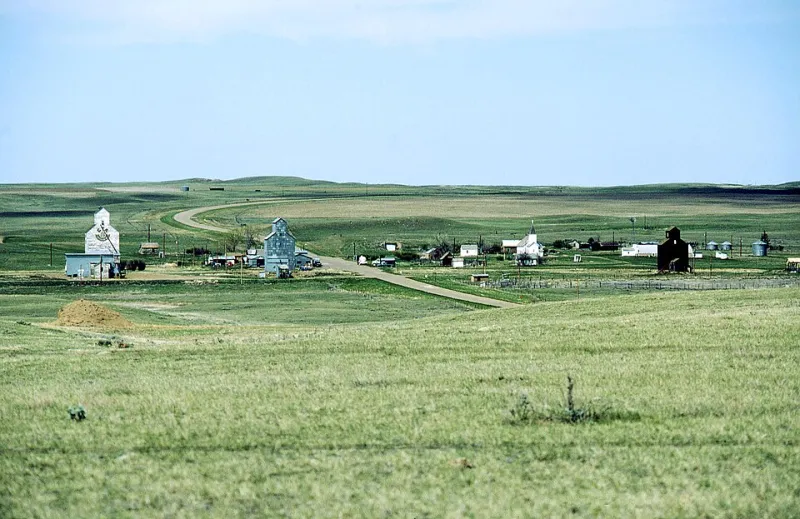
Photo: USDA NRCS Montana, Public domain, via Wikimedia Commons
Let's be honest for a second. If you live in a mid-size city or a major metro area, you've probably seen McDonald's respond to customer complaints with some speed. New menu boards show up. Drive-thru lanes get reconfigured. Staff training visibly improves after a rough stretch. But if you're a regular at a McDonald's off a two-lane highway in rural Tennessee or a standalone franchise in a small Nebraska town, that same responsiveness can feel like a distant rumor.
So what gives? Is McDonald's corporate actually reading your McDVoice survey feedback differently depending on your zip code? The short answer, frustratingly, is: kind of.
Volume Is the Currency of Corporate Attention
Here's the uncomfortable math. A McDonald's location in downtown Chicago or a suburban Atlanta strip mall might generate hundreds of McDVoice survey responses in a single week. A rural franchise in a small market might pull in a fraction of that — sometimes fewer than a dozen completed surveys over the same period. When corporate teams and regional managers are analyzing feedback data, they're naturally drawn toward statistical significance. And statistical significance requires volume.
This isn't necessarily malicious. It's just how data-driven organizations work. When a complaint about slow drive-thru service appears 200 times in a week from one urban location, it's hard to ignore. When the same complaint shows up four times from a rural spot, it can get lost in the noise — or worse, get flagged as an outlier rather than a pattern.
The result is a feedback pipeline that, by its very design, amplifies the voices of customers in high-traffic markets while quietly deprioritizing input from lower-volume locations.
Franchisee Resources: The Hidden Variable Nobody Talks About
The franchise model adds another layer of complexity here. Not all McDonald's locations are created equal in terms of financial muscle. Urban and suburban franchisees — especially those operating multiple locations — often have more capital to act on feedback quickly. They can hire additional staff, invest in equipment upgrades, or roll out new training programs without waiting for corporate subsidies or extended timelines.
Rural franchisees, by contrast, are frequently operating on tighter margins. Fewer customers means less daily revenue, which means less flexibility to respond to feedback-driven recommendations. If a McDVoice survey reveals that a rural location's ice cream machine is constantly broken (a complaint that is, let's say, extremely relatable), fixing it isn't just a matter of calling a technician. It's a budget conversation, a parts availability issue, and sometimes a staffing problem all rolled into one.
So even when rural feedback does make it up the chain, the franchise owner on the receiving end may not have the resources to act on it with the same speed as their urban counterparts.
What Corporate Says vs. What the Data Suggests
McDonald's corporate messaging consistently emphasizes that every customer's voice matters, regardless of location. And to be fair, the McDVoice survey platform itself doesn't discriminate — the same questions are asked, the same submission process applies, and the same validation codes are generated whether you're in Manhattan or rural Montana.
But there's a difference between equal access to the survey and equal weight in the outcome. Industry insiders and franchise consultants who've worked with the McDonald's system have noted that regional performance benchmarks are often calibrated around high-volume location averages. When a rural store's scores are compared against these benchmarks, the lower absolute number of responses can make their performance look statistically murky — even if the underlying customer experience issues are just as real and just as urgent.
Some franchise operators in smaller markets have privately acknowledged that the feedback loop feels one-directional. They receive reports. They see the scores. But the resources and support needed to act on them don't always follow.
The Loyal Regular Problem
There's also a demographic quirk worth noting. Rural McDonald's locations often serve a more loyal, repeat customer base. The same faces show up day after day. And loyal regulars, as it turns out, are less likely to complete McDVoice surveys — not because they don't care, but because familiarity breeds a kind of survey fatigue. Why fill out a form about your morning coffee stop when you've been going to the same spot for fifteen years?
Urban and suburban locations, by contrast, serve a higher proportion of one-time or infrequent visitors — travelers, commuters, tourists — who are more likely to have a strong reaction (positive or negative) and therefore more likely to complete a survey. This skews the feedback pool in ways that don't necessarily reflect the true quality of the rural experience.
Is There a Fix? Some Franchisees Think So
A handful of forward-thinking franchise operators in smaller markets have started taking matters into their own hands. Some actively encourage survey completion by training staff to mention the McDVoice survey at the point of sale — not in a pushy way, but as a genuine invitation. Others have started supplementing the official survey data with their own informal feedback channels: comment cards, social media monitoring, even just chatting with regulars.
The goal is to create a richer, more locally contextualized picture of the customer experience — one that doesn't rely solely on the volume-driven metrics that tend to disadvantage smaller locations.
On the corporate side, there's at least some awareness of the disparity. McDonald's has periodically adjusted how it weights survey data for locations below certain volume thresholds, though the specifics of those adjustments aren't publicly disclosed. Whether those tweaks are sufficient to level the playing field is an open question.
What You Can Do Right Now
If you're a regular at a rural or lower-traffic McDonald's and you want your voice to actually count, here's the honest truth: completing the McDVoice survey every single time you visit is genuinely one of the most impactful things you can do. Because volume is currency, your individual response carries more relative weight at a smaller location than it would at a high-traffic urban spot.
Be specific in your comments. Don't just select a rating — use the open-text fields to describe exactly what happened, good or bad. Specificity is what transforms a data point into an actionable insight, especially when the total response pool is small.
And if something is genuinely broken — whether that's a service issue, a facility problem, or a staffing concern — say so clearly. The feedback gap is real, but it's not insurmountable. The customers who show up consistently and speak up consistently are the ones who eventually move the needle, even in markets that corporate isn't watching as closely as it should be.
Your McDonald's might be small. Your town might be quiet. But your experience matters — and the more you make that clear through the survey, the harder it becomes for anyone to look the other way.